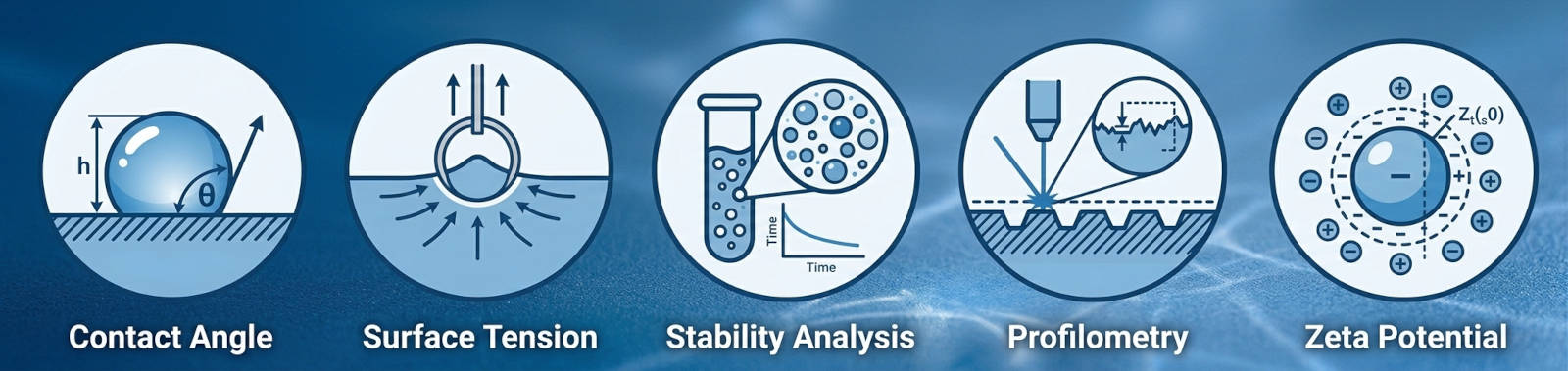
Precision surface and interface evaluation is vital for optimizing adhesion, formulation stability, coating performance, and material durability across advanced industrial and research applications. This section provides high-impact technical summaries, standard compliance guides, and practical methodology insights covering optical contact angle measurement, dynamic tensiometry, dispersion and emulsion stability analysis, zeta potential, and advanced surface property testing. Explore our curated application notes below to enhance your formulation workflows, streamline quality control, and access full technical documentation directly from our global manufacturing partners.
Key Technologies
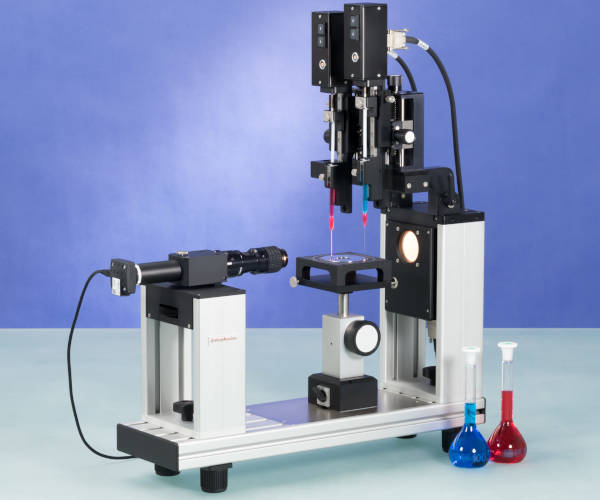
Contact Angle
Surface Tension
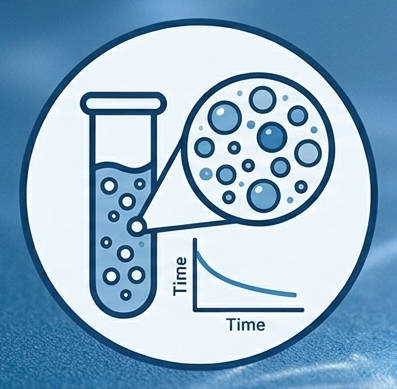
Stability Analysis
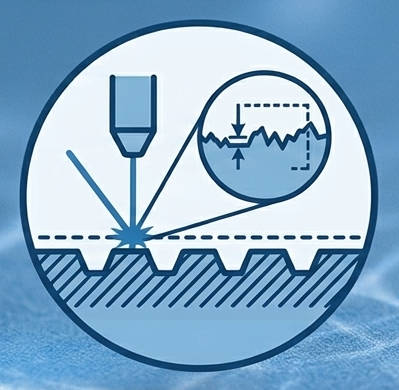
Profilometry
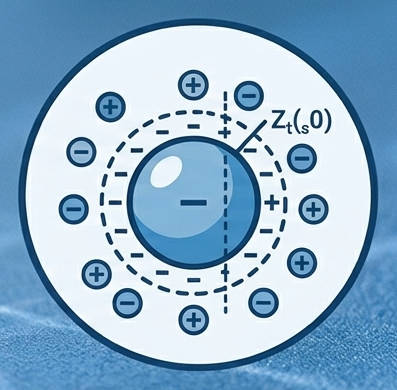
Zeta Potential
Featured Articles
Surface Analysis & Characterization
Technical guide
Understanding Contact Angle Measurement: Principles, Methods and Applications
Overview:
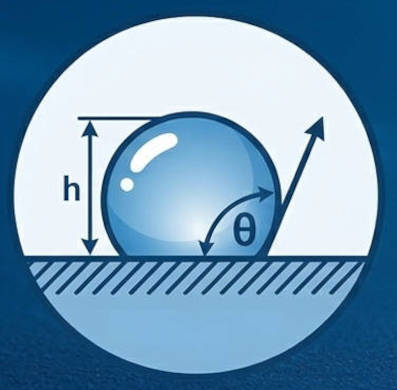
This technical guide examines contact angle measurement as a primary analytical technique for assessing solid surface wettability, liquid-solid interactions, and surface free energy across diverse manufacturing and research industries. It breaks down fundamental scientific principles governed by Young’s equation and interfacial tension balances, illustrating how wetting behavior directly impacts adhesion, coating performance, and surface treatment efficacy.
Key Takeaways:
Wettability Classification: Contact angles measure solid surface wettability, distinguishing between hydrophilic and hydrophobic surfaces.
Core Methods: Key measurement techniques include sessile drop, pendant drop, Wilhelmy plate, and dynamic contact angle methods.
Surface Free Energy: Contact angles combined with models like OWRK, Fowkes, or Wu allow estimation of surface free energy for adhesion and coating evaluation.
Applications & Accuracy: Vital across plastics, coatings, and electronics industries; accurate results require strict control of surface cleanliness, roughness, and environmental factors.
CMC Determination by Surface Tension Measurement with a Tensiometer of the DCAT Series (DataPhysics Instruments)
Overview:
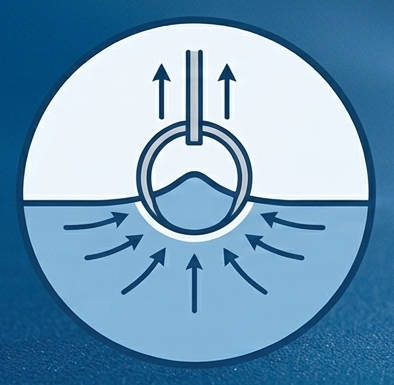
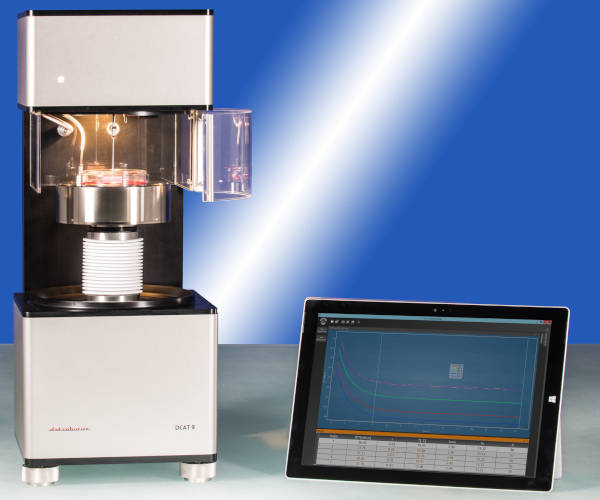
The Critical Micelle Concentration (CMC) serves as an essential indicator for evaluating surfactant efficiency in sectors ranging from cosmetics and detergents to pharmaceuticals and enhanced oil recovery. While increasing surfactant levels at lower concentrations drastically lowers surface tension through monomer adsorption, reaching the CMC triggers micelle aggregation where interfacial properties level off. This document highlights the automated evaluation of a Lutensol® AO7 solution utilizing a DataPhysics DCAT force tensiometer paired with an LDU 25 Liquid Dosing Unit to execute precise Wilhelmy plate measurements.
Key Takeaways:
Combining high-precision force tensiometry with automated titration enables seamless, operator-independent data acquisition across defined concentration steps. For Lutensol® AO7, the automated measurement successfully captured the transition curve, yielding a precise CMC of approximately 0.011 g/L with a corresponding surface tension of 27.5mN/m. This approach streamlines formulation development, optimizes material consumption, and ensures consistent quality control.
High-Precision Droplet Dosing for Wettability Analysis on Small Structures Using the FDDS FlexDrop Dosing System
Overview:
Characterizing surface wettability on microelectronic devices, medical implants, and precision components often requires analyzing areas too small for conventional microlitre syringes. The DataPhysics FDDS FlexDrop dosing system solves this by generating stable, reproducible droplets down to 25 pL using an inertia-driven, pressure-neutral mechanism.
Key Takeaways:
Interchangeable cartridge orifice sizes (30µm to 150 µm) allow you to tailor droplet volumes from ~35 pL to 1900 pL, fitting restricted test areas while maintaining consistent contact angle accuracy.
PCA 200: Portable Contact Angle Measurements According to ASTM D8597-24
Overview:
Ensuring proper surface cleanliness and wettability prior to coating, bonding, or printing requires reliable quality control. This application note demonstrates how the DataPhysics PCA 200 Portable Contact Angle Goniometer evaluates aluminium surface treatment, lubrication, and cleaning stages in full compliance with the ASTM D8597-24 standard.
Key Takeaways:
Featuring a lightweight, cable-free design with automatic dual-liquid dosing, the PCA 200 delivers contact angles and surface free energy (SFE) calculations within seconds. Testing successfully tracked the transition of aluminium surfaces from as-received, lubricated, and cleaner-treated states through to final water rinsing.